Spend a Saturday in Reading this July and you can feel two different towns operating in parallel. One runs on foot traffic, porch amps, and a scavenger hunt for a striped shirt. The other runs on parking lots, big-box anchors, and a specialty grocer that took years of rumor to actually confirm. Both are having a good summer. What is interesting is that they are pulling in opposite directions, and residents can see the seams for the first time in a while.
This is a snapshot of the season for people who already live here. Not a moving guide. Not a "best of." Just what to notice while it is happening.
The downtown side: a summer built on foot traffic
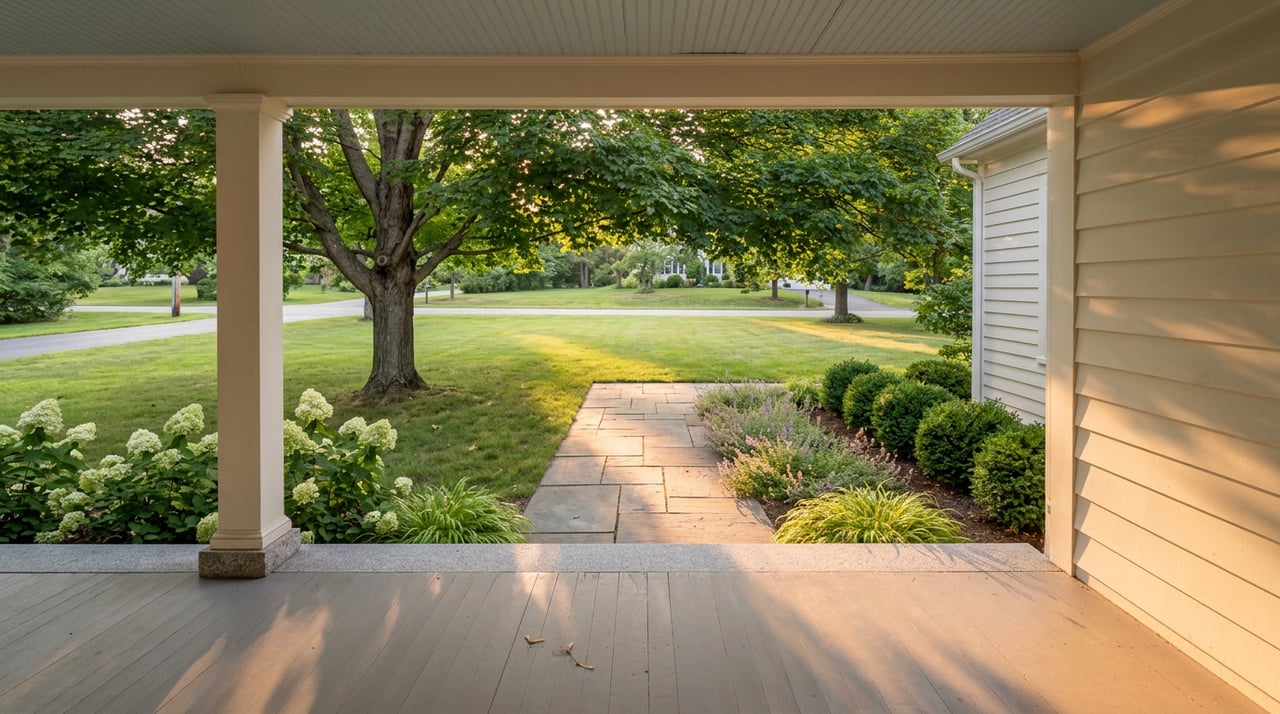
The clearest read on downtown's momentum came in late June, when Reading PorchFest returned with a record 110 musical acts spread across 48 host venues across town. That is a striking density for a community of Reading's footprint. It is also completely free, which is the point. PorchFest works because it uses the housing stock itself as infrastructure. Every porch is a stage. Every driveway is a room. No permitting circus, no ticketing, no gates.
That model is worth pausing on. Most small-town summer events depend on a single sponsor, a single date, and a single closed street. PorchFest inverts it. The town becomes the venue. The takeaway for anyone who lives here is simple: the walkable core is dense enough now to carry a distributed festival without a central stage.
Reading PorchFest 2026 featured 110 musical acts across 48 venues. That is roughly one host site for every four minutes of walking through the older streets around the depot.
July keeps the same logic going with the Find Waldo hunt, coordinated by Whitelam Books at 610 Main Street. Twenty-eight local businesses are hiding Waldo cutouts through the month, and participants collect stamps in a passport as they go. It is nominally for kids. In practice, it is a shop-local mechanism dressed up as a game, and the businesses that participate are the ones you actually want to know: the independent bookstore, the neighborhood cafes, the shops on Haven Street that live or die on repeat visits.
The Fourth of July anchors the civic side. Reading's community celebration this year featured more than 60 community groups, a Kids Fun Run, hands-on activities, a petting zoo, and the town's fireworks display. Massachusetts still bans consumer fireworks, so the licensed municipal display remains the only legal option locally, and it draws crowds accordingly. Route 128 Honda continues as a sponsor of the state's largest Independence Day parade in neighboring Wakefield, which is a useful reminder that a lot of what feels regional about the Fourth is Reading-adjacent rather than in Reading proper.
For lower-key evenings, the Reading Community Concert Band plays outdoor town concerts in front of Town Hall facing the town square, moving inside the First Congregational Church at 25 Woburn Street when the weather turns. This is the kind of programming that never trends and never stops. It is also one of the more reliable ways to gauge downtown on a weeknight without committing to a full evening out.
The restaurant lineup around the square is doing real work under all of this. A short guide to who is doing what:
- Venetian Moon for a fine-dining Italian evening with a full bar and a room built for lingering
- Bunratty Tavern as the neighborhood pub anchor, next door to The Charles
- The Charles, open Thursday through Saturday for dinner and available for private functions the rest of the week, is the newest dining addition to the walkable core
- Toscana Forno for casual Italian comfort with room for larger groups
- Post 1917 for a steakhouse night when the occasion calls for it, from chef and owner Jason Carron
- 212 Kitchen, a recently opened Chinese lunch and dinner spot a few blocks from Reading Center
The pattern here matters more than any single opening. Downtown Reading has quietly built enough distinct restaurant identities that a resident can put together three different Saturday nights without repeating a cuisine or leaving Main Street.
The Walkers Brook side: a retail corridor rewriting itself
Now drive four minutes east.
The Crossing at Walkers Brook is a different Reading. It is roughly 480,000 square feet of retail space that pulls close to four million visits a year, sitting near the intersection of I-93 and I-95 where more than 150,000 vehicles pass daily. The anchors are Jordan's Furniture and The Home Depot, with Golf Galaxy, The Paper Store, and Starbucks filling in around them. This is the highway-facing Reading, the one that serves Wakefield, Wilmington, Stoneham, and North Reading as much as it serves the town itself.
The headline event of the year on that side of town happened on paper in March. Trader Joe's confirmed it will open its first Reading location at 34 Walkers Brook Drive, in the former Staples space, with a projected late-2026 opening. It will be the chain's 22nd Massachusetts store, following recent openings in West Roxbury and Newton, and it slots in as a flagship tenant of the Crossing rather than a secondary one. Senior Planner Kevin McCarthy, quoted in the town's announcement, called the deal a coup and framed it as the natural next step in what he described as the area's arc from landfill to landmark.
That framing is worth taking seriously. The Walkers Brook corridor was a landfill within living memory. It is now the highest-traffic retail destination on Reading's tax rolls and one of the busiest along the I-93 spine. The addition of Trader Joe's does not change what the corridor is. It changes who it competes with. Residents currently drive to Saugus, Peabody, or Burlington for the same product mix. That trip goes away in late 2026.
The interesting question is what happens to the existing Stop & Shop, also on Walkers Brook Drive at number 25, which has anchored everyday grocery in town for decades. Two grocers of very different personalities inside the same short stretch of road is not a status quo. It is a setup.
What is quietly missing this year
Not every trend is additive.
Reading Rotary announced it is discontinuing hosting the Fall Street Faire, citing rising costs, volunteer shortages, and fundraising challenges. The Faire has been a fixture on the fall calendar for decades. Its absence this year is the clearest signal that the town's volunteer-run event economy is under strain in a way that the paid retail economy at the Crossing is not.
This is a real tension. PorchFest works because it costs almost nothing to produce. Find Waldo works because a bookstore and a chamber of commerce split the work across 28 storefronts. The Fall Street Faire required a single organization to shoulder logistics, permitting, and fundraising for the whole town. That model appears to have broken. What replaces it will tell you a lot about how the next five summers look here.
A resident's weekend map
If you have out-of-town family coming through in July and want to show them a version of Reading that is not on the portal listings, this is a workable loop:
- Saturday morning. Start at Whitelam Books on Main Street. Pick up a Find Waldo passport and hit six or eight of the 28 participating shops on foot.
- Saturday lunch. 212 Kitchen for something quick, or Toscana Forno if the group is larger.
- Saturday evening. Check the Reading Community Concert Band schedule. If they are playing in front of Town Hall, that is where you want to be at dusk. If not, dinner at Venetian Moon or The Charles.
- Sunday errand. Drive to The Crossing at Walkers Brook. Note the former Staples box at number 34. That is your future Trader Joe's. Come back in six months.
The loop is deliberate. It sends visitors through both Readings in the same twenty-four hours: the walkable, low-cost, community-run summer downtown, and the highway-facing retail spine that is quietly being rebuilt for the next decade.
The one line worth keeping
Reading is not a town that leans on any single identity right now. It has a summer downtown that works because the walkable core has finally hit the density it needs, and it has a retail corridor that is upgrading its tenant mix faster than most residents realize. The two sides of Route 128 tell different stories, and the interesting move as a resident is to spend time in both this summer and notice which one you are drawn back to.
If you have been thinking about what your own address in Reading looks like against this backdrop, whether you own one of the older homes near Haven Street or something closer to the corridor, Covelle & Company is happy to talk. Schedule a Consultation whenever the timing is right.