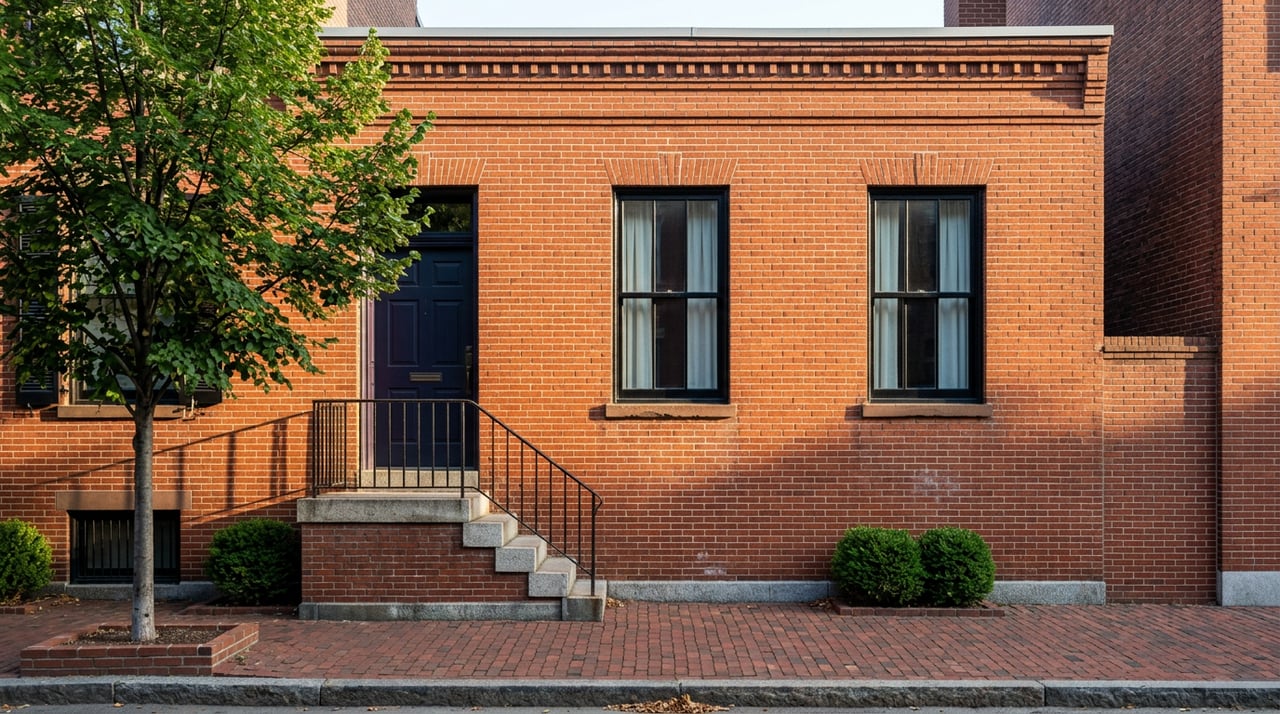
A homeowner on a brick rowhouse near Union Park decides in July that the tired aluminum-clad windows have to go before the home hits the market. The contractor can start in three weeks. The windows can be fabricated in four. By that math, the house is ready to photograph by September.
Then the paperwork lands on the South End Landmark District Commission's desk, and the math changes completely. This is a house inside the largest Victorian rowhouse district in the country, and in this district, some exterior work requires advance approval, while ordinary maintenance may be exempt and other work may be approved administratively. For projects requiring a full hearing, the commission meets once a month. Miss the cutoff for this month's agenda, and the project doesn't slip by a few days. It slips by four to six weeks, minimum.
The Calendar Is the Risk, Not the Price
Sellers in the South End tend to worry about the wrong variable. They price against comps, agonize over staging, and assume that if the home looks right, the timeline will take care of itself. In most Boston neighborhoods, that's a reasonable assumption. In a Landmark District, it isn't.
The South End Landmark District Commission, known locally as SELDC, holds its public hearing on the first Tuesday of every month. Projects requiring a full hearing need a Design Approval Application on that agenda before work can start. No building permit gets issued without the commission's Certificate of Design Approval in hand. If your renovation isn't approved, it isn't happening, no matter how ready your contractor is.
For a seller trying to time a listing to spring or fall market windows, that single monthly hearing is the real constraint. Not the crew's availability. Not the supplier's lead time on custom sash. The commission's calendar.
One Hearing a Month, One Chance to Get the Paperwork Right
For projects requiring a full hearing, here's the detail that catches people off guard: an application isn't just due before the hearing, it has to be certified complete fifteen business days before the hearing to make that month's agenda. An incomplete submission doesn't get a grace period. It gets bumped to the following month, which means the next opportunity is another thirty days out.
Run that forward. For a project requiring a full hearing, a seller who wants exterior work finished before a spring listing needs a complete application in commission hands roughly three weeks before the January or February hearing, not the week before. Miss that window and the project doesn't lose a week, it loses the better part of a selling season.
There is some relief built into the process. The commission has delegated approval of ordinary maintenance and minor-impact work, things like in-kind repairs, to staff, who can sign off administratively and simply ratify the decision at the next public hearing rather than making the applicant wait for a full vote. For those administratively approved items, the resulting Certificate of Appropriateness stays valid for two years from the date of the approval letter, which means a seller who clears the small stuff early isn't racing against the calendar every time a listing date shifts. That distinction between administrative review and a full hearing item is the difference between a two-week turnaround and a two-month one, and it depends entirely on how the scope of work is framed in the application.
What "Ordinary Maintenance" Buys You, and What It Doesn't
The commission's own standards make a sharp distinction that most sellers never think to ask about: repair versus replace. Wood windows are treated as part of the district's architectural fabric, and the written standards state plainly that further loss of original or historically correct wood windows is not acceptable. Aluminum replacements are only considered on a case-by-case basis, and generally only where the original wood sash has already been lost on that specific building. In other words, a seller who assumes a quick window swap is a cosmetic upgrade may instead be opening a design review that asks for wood, not aluminum, and a longer conversation than a simple maintenance item would require.
This is exactly the kind of detail that separates a smooth pre-listing renovation from one that stalls. A repaint of existing wood trim, for example, is generally exempt from commission review altogether. A full window replacement is not. The scope of the work, not the intent behind it, determines which track the project lands on.
What Came Before the Commission This Year
The best way to understand what's realistic is to look at what actually came before the board. At the commission's June 2026 hearing, the agenda included a proposal to restore a brownstone garden wall at a Lawrence Street property to match its original profile, with front steps and garden wall to be primed and painted in a specified historical color. The same agenda carried an emergency repair application at 10 East Springfield Street for a supporting wall beneath an entry staircase, a repointing application at 52 East Springfield Street to match existing conditions, a fire escape repair at 39 Gray Street requiring rusted bolts replaced and a fire escape affidavit filed after the work, and a roof renovation at 761 Harrison Avenue.
None of that is unusual. It's the normal texture of a South End exterior maintenance docket, and it tells a seller something useful: the agenda includes repair-in-kind work as well as more substantial proposals, not just dramatic redesign. A roof deck or a new dormer still requires the full hearing process and can draw more scrutiny. A repaired fire escape or a repointed facade is far more likely to move through administrative review. Knowing which category your project falls into before you file the application saves weeks.
The Math: Why a Missed Cycle Costs More Than a Month
Here's where the calendar risk actually costs money. Data tracked across major listing platforms showed a median sale price near $1.3 million in the South End for the three months ending May 2026, up slightly from the same period a year earlier, with homes selling in an average of 23 days. That's a tight market. One market analysis published in the spring of 2026 pegged year-over-year appreciation in the neighborhood near 20 percent, with price per square foot climbing above $1,200, a figure that reflects a simple structural fact: nobody is building new Victorian rowhouses in a landmark district. The supply is fixed. It will never expand.
That combination, fixed supply and fast-moving demand, means a well-presented listing doesn't sit. It also means a listing that isn't ready doesn't get a second chance to catch that window easily. May 2026 saw 76 homes sold in the South End, down from 82 the year before, a sign that even in an appreciating market, the number of transactions is thinner than the headline price growth suggests. Fewer trades happening among fewer available homes is exactly the environment where a seller who loses a month to a stalled Landmarks application isn't just delayed. They're re-entering the market a full cycle behind where their home would have cleared if the exterior work had been approved on schedule. The National Association of Realtors has found that staging alone can lift a sale price by as much as 1 to 10 percent, which only matters if the home is actually staged, photographed, and listed on the calendar you planned for, not the one the commission handed you instead.
Building Your Renovation Calendar Backward From List Day
The fix isn't complicated once you see the mechanism. It just requires working backward instead of forward.
- For work requiring a full hearing, set the target list date first, then count back to the SELDC hearing that needs to happen at least six to eight weeks before it, accounting for permit issuance and the actual construction timeline after approval.
- For those projects, submit the Design Approval Application early enough that it can be certified complete fifteen business days ahead of that hearing, not the week before.
- Separate the scope into what likely qualifies for administrative review, in-kind repairs and ordinary maintenance, versus what will require a full hearing vote, like roof decks, new openings, or window replacements beyond repair.
- If a project is likely to draw commission questions, such as anything touching original wood windows, plan for a continuance to the following month as a real possibility, not a worst case.
- For anything that clears administrative review, remember the resulting certificate is valid for two years. If a listing date shifts, that approval doesn't have to be redone.
The commission doesn't slow down a South End sale. A seller who didn't know the calendar does.
Frequently Asked Questions
Does every exterior project need a full commission hearing? No. Ordinary maintenance and repairs with minimal visual impact can move through administrative review, where commission staff approve the item and simply ratify it at the next monthly hearing. The distinction depends on how the project is described and scoped in the application, which is exactly why an early conversation with commission staff before filing tends to save time later.
What happens if my project isn't finished by the time I want to close? The Certificate of Design Approval and the underlying building permit govern the work, not the sale. A completed or in-progress renovation with proper approvals in hand can still support a sale, though buyers and their attorneys will want to see the paperwork trail, which is one more reason to keep the decision letter and approval placard documentation organized from day one.
Can I just paint the trim myself without going through the commission? Painting of existing wood trim is generally exempt from commission review. Painting masonry is a different matter and is only considered when the masonry is already painted or significantly damaged, with the proposed color required to approximate the original.
If you're planning a South End sale that involves any exterior work, the smartest first move isn't calling a contractor. It's mapping your renovation scope against the commission's calendar before you set a listing date around it. Covelle & Company builds that calendar alongside the design plan from the start, so the paperwork and the presentation land on the same timeline. Schedule a Consultation to walk through what your rowhouse needs before it goes on the market.
This article is general information, not legal, tax or financial advice. Consult a qualified professional about your situation.