If your Boston condo is about to hit the market, design is not the finishing touch. It is part of the sales strategy. In a market where buyers can compare many options online and in person, the homes that feel clear, bright, and easy to understand tend to stand out faster. This guide walks you through how to prepare your condo with a design-led approach so your space reads well in photos, shows well in person, and launches with confidence. Let’s dive in.
Why design matters in Boston
Boston’s condo market gives buyers choices. Recent market data shows 1,673 condos for sale in Boston at a median listing price of $849K, while most homes stay on the market about 40 days and receive 2 offers. The Warren Group also reported 1,276 condo sales in Greater Boston in April 2026, with a median condo price of $620,000, down 1.4% year over year.
That does not mean demand is weak. It means buyers can be selective. When your condo is one of many options, thoughtful preparation can help your listing feel more compelling from the start.
Start with how buyers actually shop
Most buyers begin online. NAR reports that 52% of buyers found the home they purchased online, and 81% said listing photos were the most useful feature in their search. That makes your prep work more than housekeeping. It becomes part of your marketing performance.
A design-led launch focuses on what the camera sees first. Clean sightlines, balanced lighting, and a calm visual palette help buyers click, save, and book a showing. If the online presentation feels honest and polished, you also reduce the letdown that can happen when a home looks very different in person.
Focus on the rooms that carry the listing
Not every room needs the same level of attention. According to NAR, the most commonly staged rooms are the living room, primary bedroom, dining room, and kitchen. For most Boston condos, the highest-impact sequence is the living room, primary bedroom, and kitchen, with the dining area close behind.
These rooms shape the buyer’s first impression of comfort, function, and lifestyle. In many condos, they also appear in the strongest listing photos. If your budget or timeline is limited, start there.
Living room first impressions
Your living room often sets the tone for the entire listing. It should feel open, scaled correctly, and easy to move through. Oversized furniture, too many accent pieces, or heavy decor can make a city condo feel smaller than it is.
A design-forward setup usually works best with fewer, better pieces. Think clean-lined seating, edited surfaces, and enough negative space for the room to breathe. The goal is to show proportion, not to fill every corner.
Primary bedroom calm
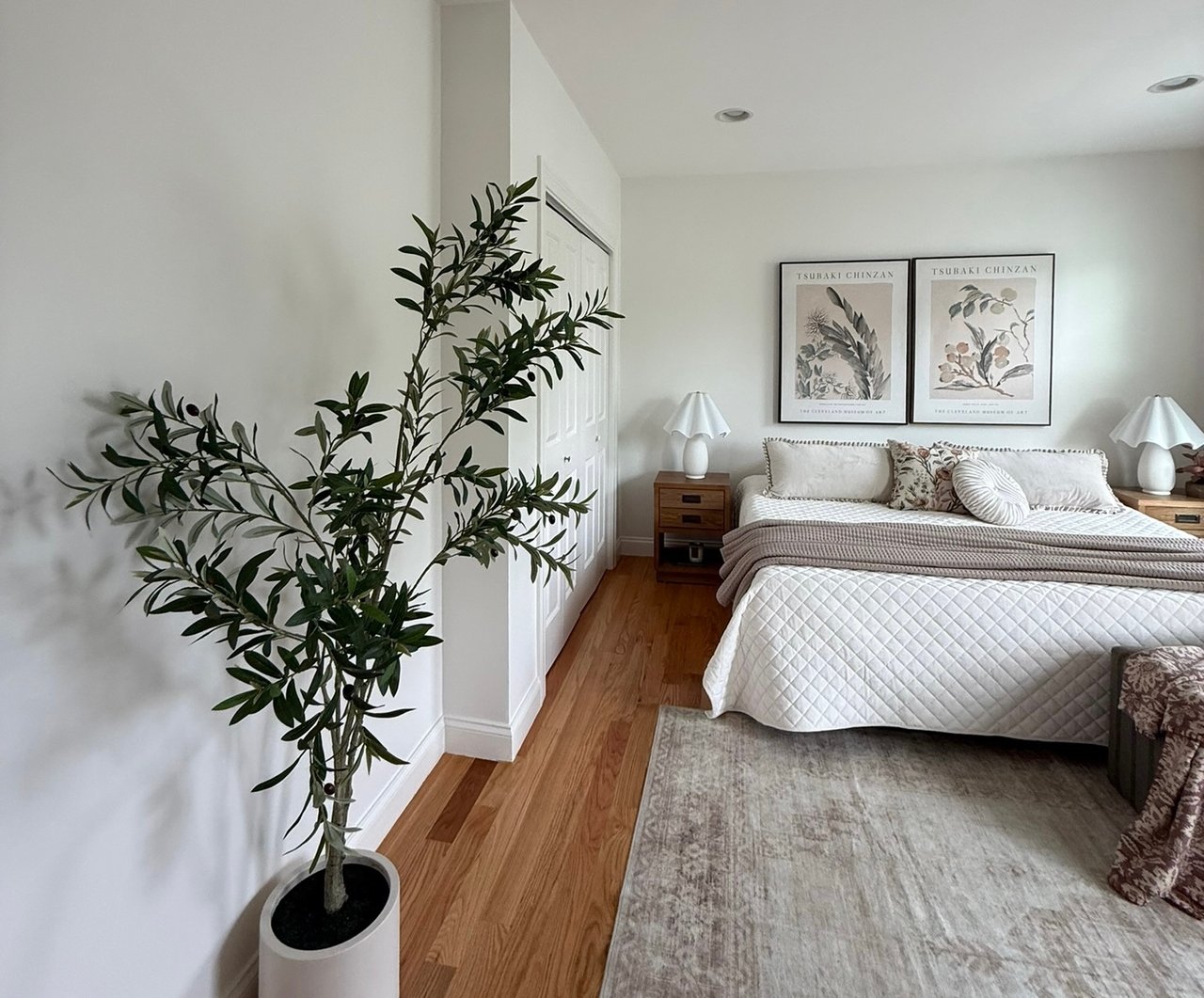
Buyers respond to bedrooms that feel restful and uncluttered. That matters even more in Boston condos, where square footage can be efficient rather than expansive. Crisp bedding, limited accessories, and clear floor area help the room feel larger and more serene.
You also want the bedroom to read as versatile. If the room is doing double duty as an office or storage overflow, simplify it before photos. Buyers need to understand the intended use right away.
Kitchen clarity and function
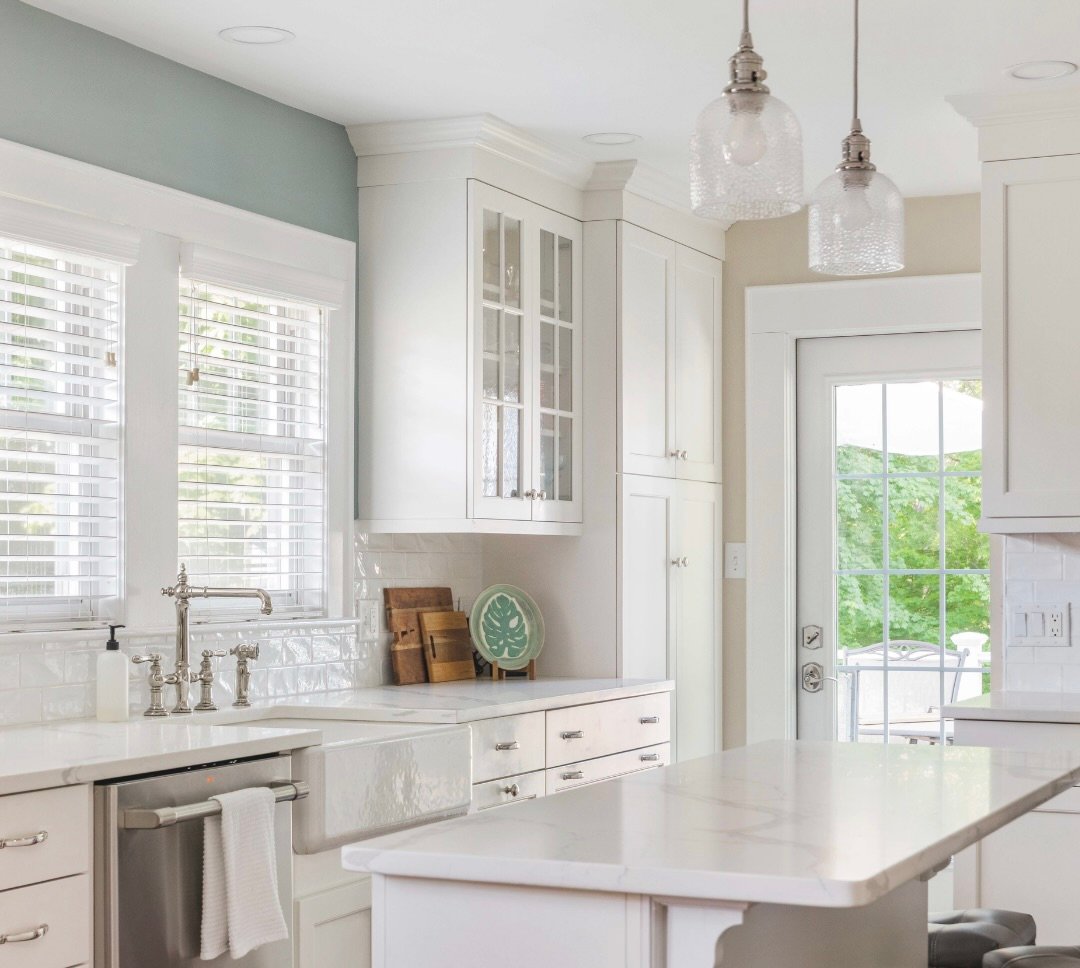
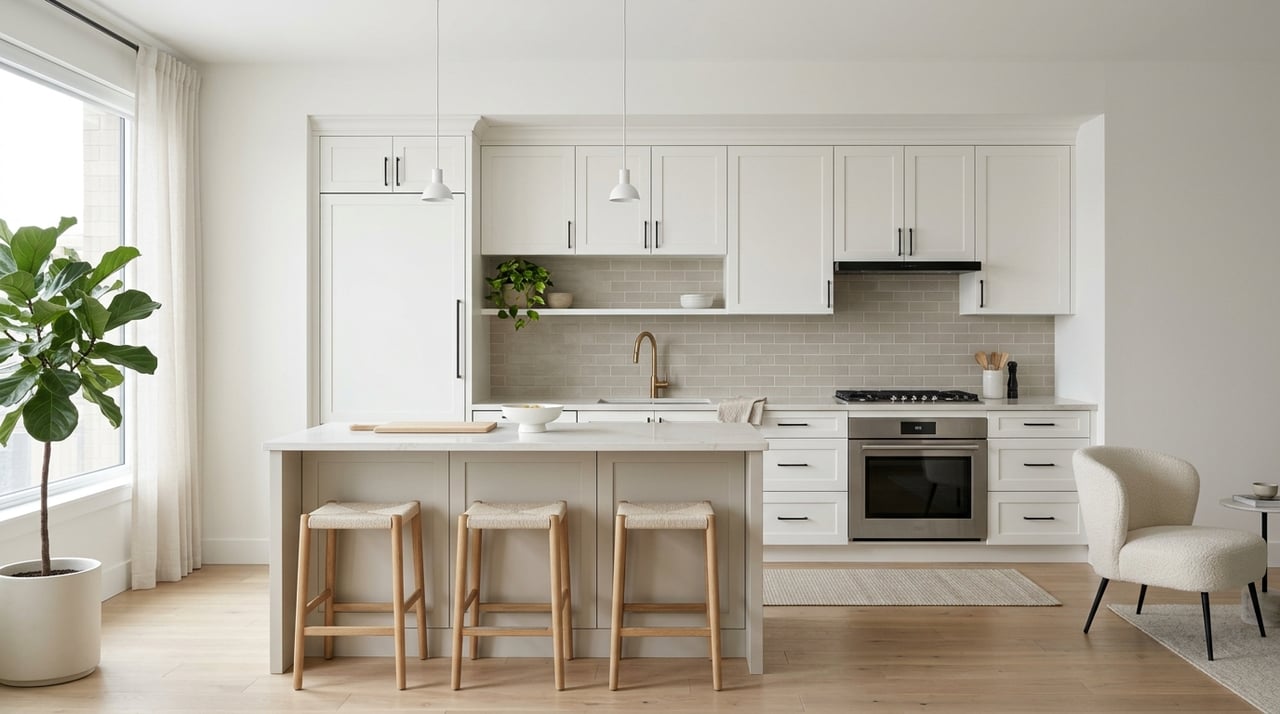
The kitchen is one of the most important visual spaces in any listing. Even if you are not taking on a renovation, the room should feel bright, clean, and edited. Clear counters, polished finishes, and consistent lighting go a long way.
NAR specifically points to crowded kitchen counters as a turnoff for buyers. In practice, that means putting away small appliances, paperwork, extra dish racks, and anything else that distracts from the cabinetry, counters, and layout.
Declutter like a marketer
Decluttering is not about making your home look empty. It is about removing friction. Buyers should be able to look at a room and quickly understand its size, purpose, and storage.
In Boston condos, clutter tends to show up in predictable places. Kitchen counters, bathroom vanities, entry drop zones, and closets can quietly make the home feel overfull. NAR also notes that bathroom clutter, personal photos, and overstuffed storage areas can hurt buyer response.
What to edit before photos and showings
- Remove most personal photos and highly specific decor
- Clear countertops in the kitchen and bathrooms
- Store away toiletries, cleaning supplies, and laundry items
- Thin out bookshelves and open shelving
- Reduce furniture if circulation feels tight
- Organize closets, cabinets, and storage areas so they do not look packed
- Keep pet items out of sight when possible
When storage is limited, this step matters even more. Buyers notice whether a condo feels like it has room to breathe. If every closet is stuffed, they may assume the home lacks enough storage.
Clean and light are your best low-cost upgrades
If you want the strongest return for the least disruption, start with the basics done exceptionally well. NAR identifies decluttering, full-home cleaning, and fresh paint or lighting updates as some of the best low-cost prep categories. Those improvements support both photography and in-person showings.
A professionally cleaned condo simply reads better. Dust, soap residue, dull finishes, and smudged glass may seem minor, but the camera catches them. Buyers often do too.
Lighting that flatters the space
Boston condos benefit from bright, even light. Open the blinds, maximize natural light, and make sure every bulb works. Use consistent color temperature throughout the home so one room does not feel warm and yellow while another feels stark and blue.
Bad lighting is one of the showing issues buyers notice quickly. The right lighting helps finishes feel fresher, corners feel lighter, and rooms feel more expansive.
Paint and finish refreshes
Fresh paint can make a condo feel cared for and current. Neutral, light-reflective colors usually support the broadest buyer appeal and help photography look cleaner. Touch-up work on trim, doors, and walls can also sharpen the overall impression.
This is where a design-led eye matters. The best updates are not always dramatic. Often, they are subtle choices that help the architecture and natural light do the work.
Choose cosmetic updates carefully
For many Boston condo sellers, cosmetic improvements are the sweet spot. Replacing dated hardware, updating light fixtures, refinishing paint, or improving styling can elevate the listing without delaying launch. These updates can also support a stronger visual story in photos and video.
If you are considering kitchen or bath work, know where the line is between simple cosmetic prep and renovation. The City of Boston says adding or replacing kitchen cabinets does not require a permit on its own, but if the work affects gas lines, electrical lines, or becomes a full kitchen renovation, the kitchen renovation permit process applies.
Boston permit rules to check first
Boston is clear that only licensed contractors may apply for plumbing, electrical, or sheet-metal permits tied to kitchen or bath renovations. Homeowners cannot apply for electrical permits themselves. The city also warns not to begin work before a permit is issued, since that can lead to double permit fees or code violations.
That means timing matters. If your listing timeline is tight, you want to avoid starting work that could trigger approvals, inspections, or contractor delays unless the expected payoff is clear.
Historic district caution for exterior changes
If your condo is in a protected district, exterior changes require extra care. In Back Bay, all proposed exterior work is subject to review by the Back Bay Architectural District Commission, and approval is required before any exterior work begins.
For condo owners, that means visible changes such as windows, façade elements, or other exterior alterations should be checked early. If an improvement affects the exterior appearance, confirm the rules before making plans.
Stage for photos, not just open houses
Staging is often misunderstood as a final cosmetic layer. In reality, NAR defines staging as cleaning, decluttering, repairing, depersonalizing, and updating a home so buyers can picture themselves in the space. It is as much about clarity as style.
That matters because staging can influence both speed and price. In NAR’s 2025 Profile of Home Staging, 83% of buyers’ agents said staging made it easier for buyers to visualize the property as a future home, and 29% of agents said it increased the dollar value offered by 1% to 10%. Nearly half of sellers’ agents said staging reduced time on market.
What effective staging does in a condo
Good staging helps buyers understand scale. It shows how to live in the space without making it feel crowded. It also highlights flexible areas, which is especially useful in condos where one room may serve more than one purpose.
The strongest staging choices usually feel quiet and intentional. They support the architecture, improve flow, and keep the focus on light, volume, and finish quality rather than on decor.
Build a launch plan around presentation
Preparation works best when design decisions, photography, and marketing are aligned. If you improve the condo but photograph it poorly, you leave value on the table. If you stage beautifully but let clutter return before showings, the buyer experience becomes inconsistent.
A smooth pre-listing process usually follows a simple order:
- Assess the condo room by room
- Prioritize repairs, cleaning, decluttering, and cosmetic updates
- Confirm whether any planned work requires Boston permits or district review
- Stage the key spaces for scale, light, and versatility
- Photograph the condo in bright, consistent conditions
- Launch with imagery that matches the in-person experience
This kind of discipline matters in a selective market. Buyers compare quickly, and your listing has to communicate value before they ever step through the door.
Why a design-led strategy pays off
The payoff is not just a prettier condo. It is a clearer market position. When your home feels polished, functional, and visually coherent, buyers can focus on the space itself rather than on distractions.
That can lead to stronger engagement online, better showing feedback, and a more confident launch. In a Boston condo market where buyers have options, those details can shape both time on market and the quality of interest you generate.
If you want a single, accountable partner to guide the process from prep through launch, Covelle & Company brings design, staging coordination, renovation advisory, and listing execution together under one roof.
FAQs
What is the best way to prepare a Boston condo for sale?
- Start with decluttering, deep cleaning, bright consistent lighting, and focused staging in the living room, primary bedroom, and kitchen. Those steps usually create the strongest impact for photos and showings.
Which rooms matter most when staging a Boston condo?
- The living room, primary bedroom, and kitchen usually carry the most weight, with the dining area also important. These spaces often drive the first impression online and in person.
Do cosmetic kitchen updates in Boston require a permit?
- Not always. The City of Boston says adding or replacing kitchen cabinets does not require a permit by itself, but work involving gas, electrical, or a full kitchen renovation may require permits.
Can a Boston condo owner apply for electrical permits directly?
- No. Boston says homeowners cannot apply for electrical permits themselves, and licensed contractors must apply for plumbing, electrical, or sheet-metal permits tied to kitchen or bath renovation work.
Should you make exterior changes before listing a Back Bay condo?
- Only after checking the rules. In Back Bay, proposed exterior work is subject to review by the Back Bay Architectural District Commission, and approval is required before exterior work begins.
Does staging really help a Boston condo sell?
- Staging can help buyers visualize the home more easily, may support stronger offers, and often helps reduce time on market. It is especially useful in condos where layout, storage, and scale need to read clearly.